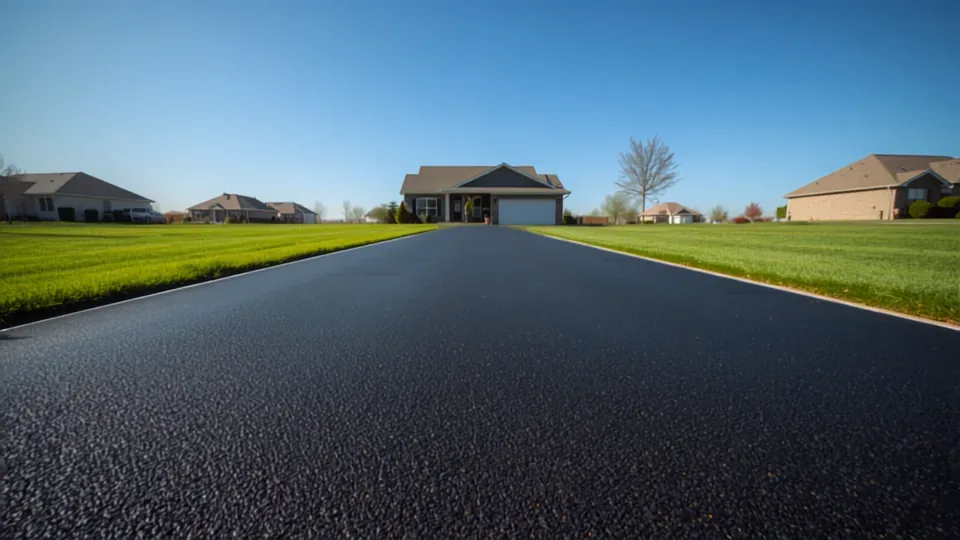
What sealcoat is actually doing
Asphalt is stone held together by a petroleum binder. The stone is effectively permanent. The binder is not — ultraviolet light breaks it down, and as it degrades it stiffens, loses flexibility, and eventually stops gripping the aggregate. That progression has a visible signature: black turns to grey, the texture roughens, and loose stone starts appearing at the edges and in the tyre tracks. That is raveling, and it means the surface has begun releasing its own material.
A sealcoat is a thin protective layer applied over the top. It blocks ultraviolet exposure, resists water penetration, and gives fuel and oil drips something to sit on other than the asphalt itself. Petroleum products are particularly worth keeping out, because they dissolve the same binder holding everything together, which is why the parking spot under a leaking vehicle deteriorates faster than the rest of the surface.
It also restores the black finish, which is the reason most people call. That is a legitimate benefit — but it is the cosmetic one, and it fades in a year or so while the protective benefit is still working. Judging sealcoat by how long it looks new is judging it by the least important thing it does.
How often, and why annual sealing is a waste of money
Every two to three years on a healthy surface. Annually is money spent against yourself.
The reasoning is physical rather than a matter of opinion. Sealcoat wears away gradually under traffic and weather. If a new coat goes on before the last one has meaningfully worn, the layers accumulate into a film that is thicker than it was designed to be — and thick sealcoat is brittle. It develops its own fine cracking, unrelated to anything happening in the asphalt beneath, and eventually flakes off in sheets that take the appearance right back to where it started.
The exceptions are load-driven rather than calendar-driven. Surfaces that take heavy repeated traffic — commercial drive lanes, delivery approaches, anywhere trucks turn — wear the coating faster and may want a shorter cycle in those areas specifically. A residential driveway getting two cars a day does not.
If a company is knocking on doors every spring offering to reseal a driveway they sealed last spring, they are selling frequency rather than protection.
Timing in the Lowcountry
Sealcoat needs warmth and dry conditions to cure, which in most of the country narrows the season considerably. Charleston is generous on temperature and stingy on dry.
The material wants surface and air temperatures comfortably above the mid-fifties and no rain during application or through the cure. Cure time varies by product but the surface generally needs to stay dry for a day, and traffic held off for at least twenty-four to forty-eight hours.
The practical constraint here is the forecast, not the thermometer. A summer afternoon storm rolling in three hours after application can ruin the coat and mean doing it again. Spring and autumn tend to offer more reliable windows than the middle of summer, and hurricane season is worth keeping in view when scheduling anything that needs two dry days in a row.
Heat brings a second consideration. Fresh sealcoat on a very hot surface can flash-dry on top while still soft underneath, which affects how it wears. Early in the day is usually better than the middle of a July afternoon.
What has to happen before the seal goes on
Sealcoat bonds to asphalt. It does not bond to dirt, grass, oil, or an old flaking coat, and preparation is where the difference between a coating that lasts three years and one that peels in six months is decided.
The surface gets cleaned — swept, blown, and in places scrubbed. Edges where soil and grass have crept in need cutting back, because a coating applied over an organic edge lifts there first.
Oil and fuel stains need treating separately with a primer or spot treatment. Sealcoat will not stick over a contaminated patch, and skipping this leaves obvious bare spots after the first rain.
Cracks wider than about a quarter of an inch get filled first. Sealcoat is far too thin to bridge an open crack — it will follow the crack down and leave a visible dark line, and more importantly the crack stays open to water.
And any real repairs happen before the seal, not after. Sealing over a pothole or an alligatored area hides it for a few weeks and changes nothing. If a bid proposes sealcoating a surface with visible structural failure, that is the wrong product for the problem.
What sealcoating cannot do
This is the part most flyers leave out, and it is the reason to read a sealcoating bid carefully.
It does not add structural strength. A coating measured in fractions of a millimetre contributes nothing to load-carrying capacity.
It does not repair cracks. It can bridge hairlines. Anything wider stays a crack.
It does not level anything. A dip that holds water still holds water, now in a darker colour.
It does not stop base failure. If the ground underneath is soft and moving, sealing the surface is putting a coat of paint on the problem.
And it does not extend the life of a surface that has already failed. There is a point where the correct recommendation is resurfacing, and a contractor who will tell you that instead of selling you a seal is worth keeping.
On new asphalt, and on commercial lots
Leave a fresh surface alone for a while. It is still stiffening, and it is still giving off the volatile part of its binder — a process measured in seasons rather than weeks. Cap it before that finishes and you either seal the vapours in, leaving a drive that stays tacky, or you end up with a film that separates the following year. The first application belongs to the next season, not this one.
Commercial lots change the calculation in two ways. Wear is concentrated — drive lanes, entrances, dumpster approaches and anywhere trucks turn take far more than the parked areas, so a sensible programme may treat those zones on a different cycle than the rest of the lot.
And a lot generally carries striping, which has to be reapplied over the fresh seal. That is worth planning as one job rather than two, both for cost and because it is the natural moment to reconsider the layout if traffic flow or accessible spaces need adjusting.
For a property that has to stay open, the work gets phased in sections so parts of the lot come back into service while others cure. Ask about scheduling around business hours when the quote is being put together.
Request a free written quote
Tell us the address and what you are looking to have done. Ask for the quote in writing with the thickness and the base work spelled out, so you can compare bids on the same terms.
Prefer to talk it through? Call (843) 594-0781.
Sealcoating FAQ
How often should a driveway be sealcoated in Charleston? Every two to three years on a healthy driveway. Annually is wasted money — the previous coat has not worn off yet, so the layers build into a thick brittle film that cracks on its own and eventually flakes away. Surfaces taking heavy repeated traffic, like a commercial drive lane, wear faster and may justify a shorter cycle in those specific areas. A residential driveway does not.
Will sealcoating fix the cracks in my driveway? No. Sealcoat is protection, not repair. It can bridge a hairline, but anything wider than roughly a quarter of an inch needs filling first, and sealing over an open crack simply leaves a dark line and an open route into the base. Structural damage — alligator cracking, potholes, soft areas — has to be repaired before any coating goes down, and if a bid offers sealcoat as the fix for those, it is the wrong product for the problem.
How long before I can drive on fresh sealcoat? Generally twenty-four to forty-eight hours, and longer is better in humid weather. The surface can feel dry to the touch well before it has cured through, so turning a vehicle on it too early can scuff or lift the new coating. Foot traffic usually returns sooner than vehicles. Whoever applies it should tell you the specific window for the product they used.
Can sealcoating be done in the summer here? Yes, but the forecast matters more than the temperature. The material needs to stay dry through its cure, and a Charleston afternoon storm arriving a few hours after application can ruin the coat entirely. Early in the day is better than the middle of a hot afternoon, because very hot asphalt can cause the surface to set before the layer beneath it has. Spring and autumn generally offer steadier windows.
How soon can new asphalt be sealcoated? Give it a full season. A new surface is still stiffening and still venting the volatile end of its binder, and laying a barrier across the top of that interferes with both. The usual results are a drive that stays tacky for far longer than it should, or a coating that lets go in sheets the following year. Anybody proposing to seal a driveway a fortnight after laying it is selling the look of the thing, not the protection.
Is sealcoating worth it at all? On a sound surface in this climate, yes — the sun here is hard on the binder that holds asphalt together, and blocking ultraviolet exposure genuinely slows that down. The value disappears in two situations: applying it too often, which produces a brittle film, and applying it to a surface that has already failed structurally, which just hides the problem for a few weeks.